

Extreme Heat Guidance for Schools
Periods of extreme heat can increase the risk of heat-related illness for students and staff, particularly during outdoor activities such as recess, physical education, athletics, lunch periods, and school events. Schools should take appropriate precautions during hot weather to help protect the health and safety of students and staff. Planning ahead and monitoring heat conditions can help schools make informed decisions about outdoor activities and supervision.
In recognition of these risks, California Education Code §33355 requires the California Department of Education to publish standardized guidelines identifying temperature thresholds and environmental conditions that may require modification or cancellation of outdoor physical activities. These guidelines are intended to support local educational agencies (LEAs) in developing local protocols that protect student safety during extreme weather conditions. School administrators and staff should consider local weather conditions, student and staff needs, and available guidance when determining appropriate extreme weather protocols.
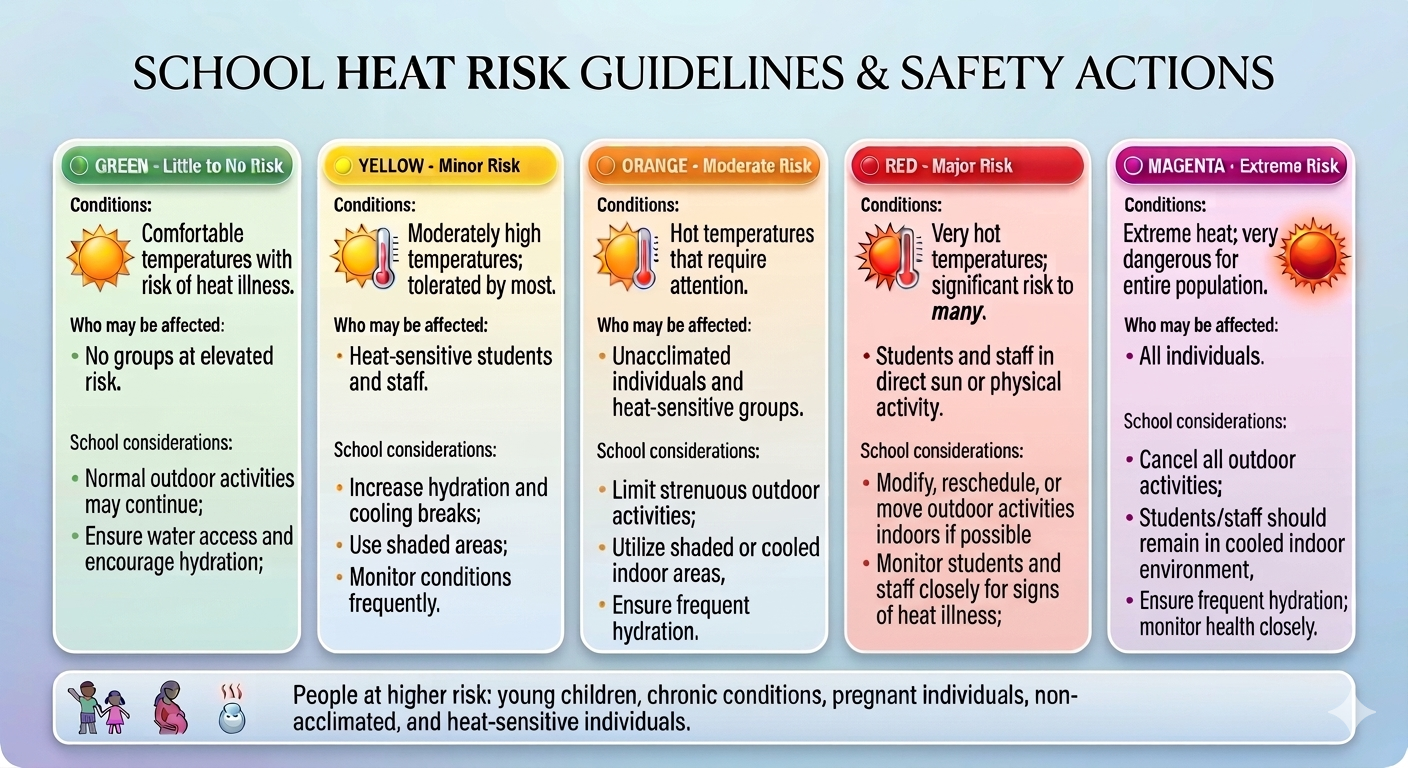
Heat Risk Levels for Schools
Schools can use the National Weather Service HeatRisk forecast to help guide decisions about outdoor activities, including recess, physical education, athletics, lunch periods, and school events. Visit the NWS HeatRisk Forecast.
The following are recommendations and considerations, not requirements.
School Considerations During Extreme Heat





Hydration
Provide frequent opportunities for students and staff to drink water throughout the day. Encourage hydration even when individuals do not feel thirsty.
Shade and Cooling
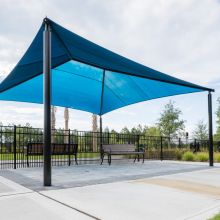
Use shaded areas for outdoor supervision and activities whenever possible. Provide access to cooling stations, air-conditioned spaces, or indoor areas during periods of elevated heat without restriction. Remind and encourage students to take rests in these areas.
Scheduling
When possible, avoid or modify outdoor activities during the hottest part of the day, generally between 10 a.m. and 5 p.m. Consider moving outdoor activities indoors during these hours.
Clothing and Sun Protection
Encourage lightweight, light-colored, loose-fitting clothing when appropriate. Hats and sunscreen may also help reduce sun exposure during outdoor time.
California Education Code § 35183.5 mandates that schools allow students to use sunscreen during the school day without a physician's note or prescription. It also permits the use of sun-protective clothing, such as hats, during outdoor activities.
Acclimatization
Students and staff who are new to the area or returning after time away may be more affected by heat. It often takes 1 to 2 weeks for the body to adjust to local weather conditions.
Health Needs and Individual Plans
Some students and staff may have medical conditions that increase the risk of heat illness. School health staff should review student health care plans and consider whether additional accommodations may be needed during periods of extreme heat. Accommodations or considerations should be documented in the Individualized Health Plan (IHP) and 504 Accommodations if appropriate.

Recognizing Heat-Related Illness
School staff supervising outdoor activities should know the signs of heat-related illness and be prepared to respond quickly.
Heat Exhaustion
Common signs and symptoms:
- Heavy sweating
- Weakness
- Dizziness
- Headache
- Nausea
- Cool or clammy skin
- Rapid pulse
What to do:
- Move the person to a cool or shaded location
- Loosen clothing
- Apply cool, wet cloths
- Offer small sips of water if the person is alert
- Monitor closely
- Seek medical help if symptoms worsen or do not improve
Heat Stroke
Common signs and symptoms:
- Confusion
- Disorientation
- Slurred speech
- Hot skin, which may be dry or still sweaty
- Rapid, strong pulse
- Collapse
- Seizures
- Unconsciousness
What to do:
- Call 911 immediately
- Move the person to a cool or shaded area
- Begin cooling the person immediately by applying cool water or wet cloths to the skin, and using fans to help lower body temperature while waiting for emergency responders.
Heat stroke is a life-threatening emergency.
Always call 911!
Resources
The following resources provide additional guidance on heat safety, recognizing heat-related illness, and protecting students and staff during periods of extreme heat.
California Department of Education (CDE)
Senate Bill 1248: Extreme Weather Guidelines
These guidelines outline California’s recommended weather thresholds and safety practices for modifying or pausing outdoor student activities during extreme weather and require local educational agencies (LEAs) to develop and implement aligned weather protocols by July 1, 2026.
View Senate Bill 1248: Extreme Weather Guidelines
California Department of Public Health (CDPH)
Health Guidance for Schools on Sports and Strenuous Activities During Extreme Heat
Provides recommendations for schools on modifying outdoor activities, protecting students during physical exertion, and recognizing signs of heat illness.
View CDPH School Heat Guidance
National Weather Service (NWS)
HeatRisk Forecast Tool
An interactive forecast tool that helps schools understand heat risk levels in their area and plan outdoor activities accordingly.
View the NWS HeatRisk Forecast
Imperial County Public Health Department
Heat Safety Information
Local guidance on preventing heat-related illness, recognizing symptoms, and protecting vulnerable populations during extreme heat events.
Visit Imperial County Heat Safety Resources
Centers for Disease Control and Prevention (CDC)
Heat and Health
Information on preventing heat-related illness, recognizing symptoms, and responding to heat emergencies.
View CDC Heat and Health Guidance
California Interscholastic Federation (CIF)
Extreme Heat and Air Quality Policy for Athletics
Provides requirements and guidance for high school athletic programs to help prevent heat illness during practices and competitions.
View CIF Extreme Heat and Air Quality Policy
Sample Extreme Weather Annex
Districts may use this sample annex as a reference for creating a district or site specific annex.
View Sample Extreme Weather Annex